Beam Paints is a Manitoulin Island Phenomenon
by Margery Frisch
The industry and innovation alive and thriving on Manitoulin Island is most evident in the quiet but steady rise of Beam Paints. “We’ve just sort of been going quietly about our business,” says soft spoken Anong Beam, sitting in the retail store that has only been in existence for a year, though Beam Paints has been growing since 2017.
An interview with Ms. Beam quietly unfolds, revealing the growth, success and ever-changing direction of the business. “I started making paints again when my kids were small and I wanted them to learn how to do it,” Ms. Beams says. “I did it with them and I was sharing it on Instagram and that’s when I started making paint for other people too. When people order, they enjoy the paint and they share it with their friends.” For the first five years of business, the only advertising was through word of mouth and social media. Ms. Beam would share her work on Instagram and followers would share her paints and their experience with it and on it went.
“It’s new that we have a retail store, just this past year,” explains Ms. Beam. “Since we began, we were always just in commerce, just me in my garage. My cousin Sheldon started working with me and then it just kind of grew from there.” Now she employs up to 14 people, most of the work involves shipping out to people and places all over the world. She points to a huge world map. “My son did this project during the pandemic, in 2020. That was his stay-home project in geography. He’d help us with orders and he’d put a pin in the map everywhere there was an order. That’s where we were shipping back then.”
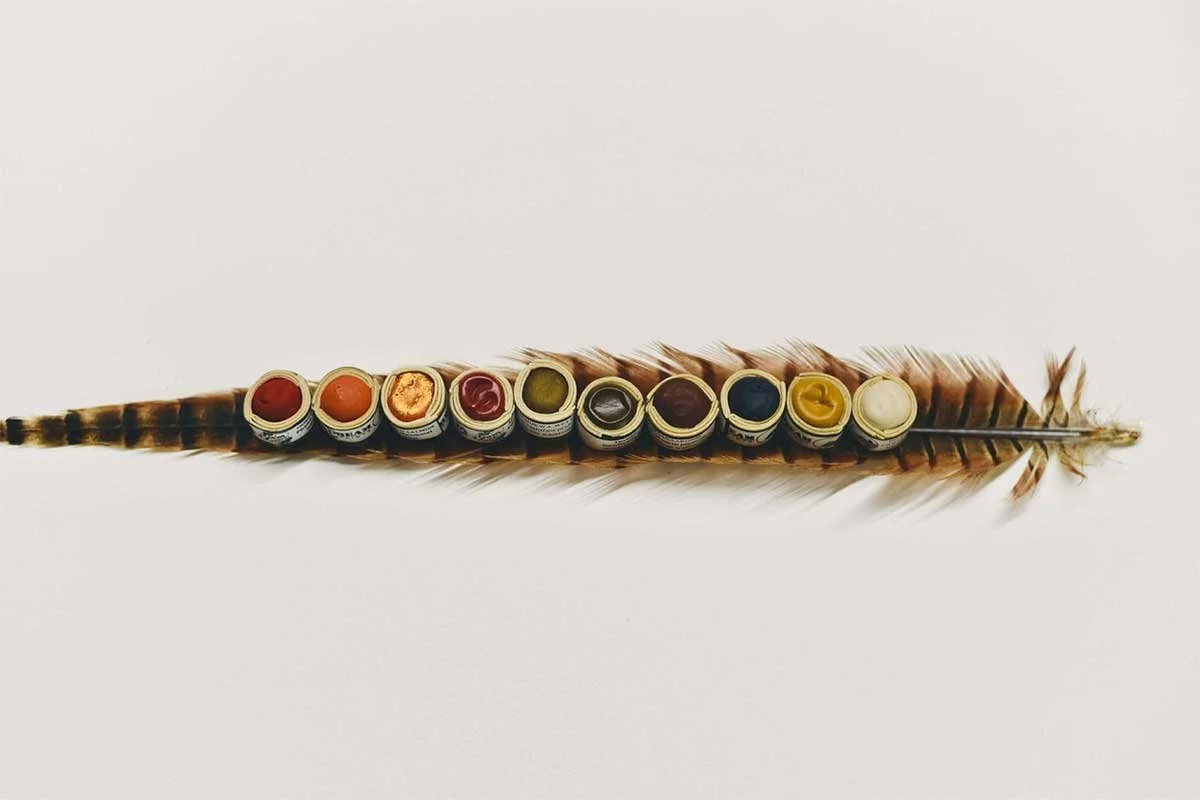
Beam Paints utilizes local, natural ingredients for its pigments and packaging.
Since 2020, they have shipped to many other parts of the world. “There’s quite a lot of arctic shipping – to Resolute, Tuktoyaktuk and many other places. We have another map of places where we’ve taught paint classes. Lyndsay Taibossigai teaches water colour classes to children through Connected North, a program that brings education to fly-in communities. There are about 100 schools she’s taught classes to in the north, virtually and we have an art kit developed for northern communities. Watercolour is a compact way to ship a lot of paint. It’s been very cost effective for the Arctic, because they can’t ship regular paint, in regular paint there’s a lot of water that would freeze,” Ms. Beam explains.
Though there are a few paint companies in Canada, none make paints with raw materials. It’s something that sets Beam Paints apart. “We make all of our paints right from our minerals. We have a little bit of Manitoulin in all of our paints,” she says and she smiles.
“Something that helped us really grow was that, right from the beginning, we joined Art and Creative Materials Institute (ACMI). Everything that we do and we source pigments from all over the world, we also dig different ochres and clay on the island – they all get tested, we send them out for third party lab testing. With natural pigments, you have to be very careful, because you don’t want to have lead or cadmium, heavy metals, so we test everything like that. Our health certifications are three times higher than Health Canada’s recommendations for safety in paint. The highest level of testing is in California, through Prop 65, LHAMA. So that’s where it goes and gets tested in the lab just to make sure they’re really safe. Everything here is safe. If a child were to accidentally ingest it, they wouldn’t even get a stomach-ache. Which is nice, because sometimes dogs – owners will message us, ‘my dog ate my paint.’ We don’t encourage that; we try to remind people they’re made out of rock. Our motto is ‘Be safe, don’t eat the paint,’” and Ms. Beam gives a wry smile.
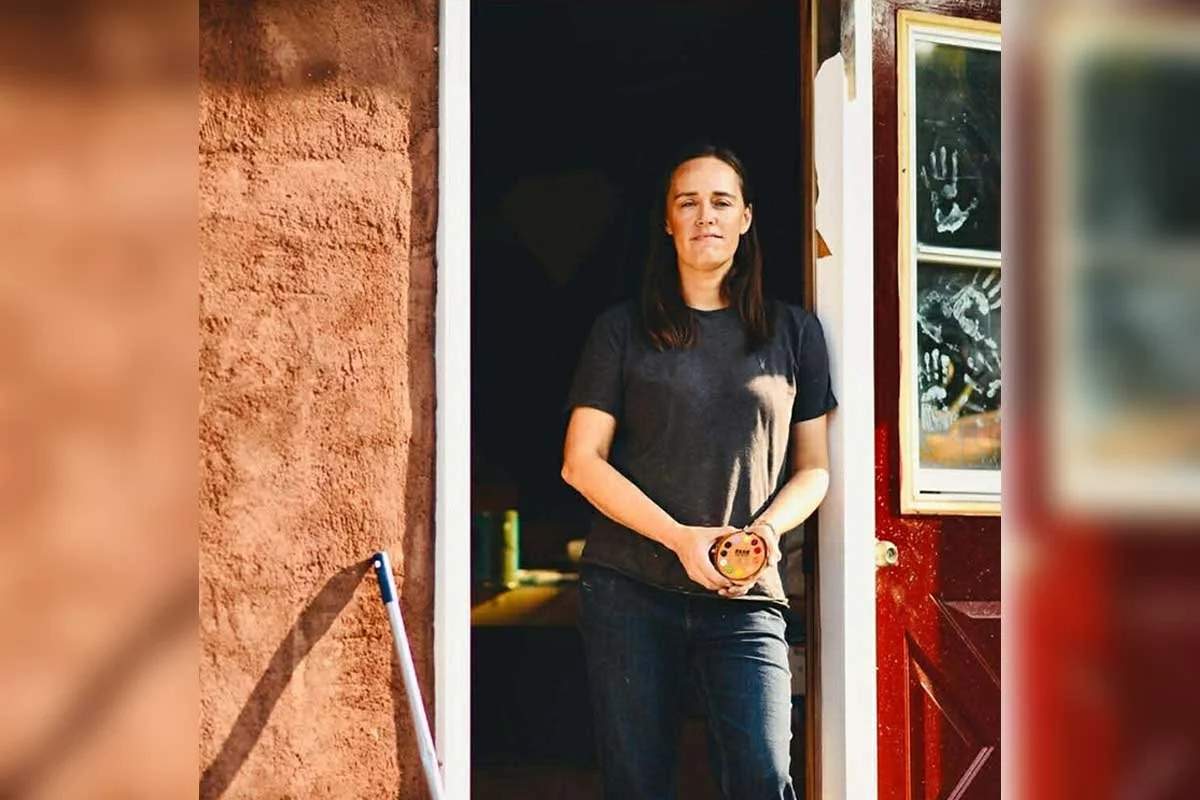
Soft-spoken Anong Beam comes from an art legacy. Anong’s parents, the late Carl and Ann Beam, were artists of some renown. An artist in her own right, she has found great success in the launch of Beam Paints.
“Back when I started making paint and making it to sell to people, it felt weird to take a paint that was made from the land and then put it in a plastic thing from Amazon, it seemed really disconnected. So that’s when I started coming up with different ways to make the packages too. We make the paints and we make the packaging. The more we do that, we get to make products that align with our values – to be plastic-free and not contribute to pollution. At one point we calculated the volume of plastic we had diverted by not going that way, I forget what the amount was, but it was really huge,” she says and laughs. Their shipping tape is even made of paper, with crafting glue.
“We really do make almost everything we put together, from raw materials. We do all our printing here with a letter press machine, a 1960 Heidelberg windmill press. All of our wood containers are made here in M’Chigeeng, from reclaimed wood from Corbiere Lumber, an Indigenous Forestry company in M’Chigeeng First Nation. This building was built by Corbiere Lumber and all hand sawed on the island, just last year.” In fact, Dennis Corbiere, a very important person in Ms. Beam’s life, encouraged her in her paint business. “He is an entrepreneur and we work together daily developing new projects and ways of showcasing the northern forest in the wood that we use for the paints, leaning into that was a big part of how we could avoid plastic and celebrate the north,” Ms. Beam says, with great pride. Their many collections show paint palettes set in a wood block, wooden blocks from reclaimed white cedar, live edge red pine and Balm of Gilead.
If you are just learning of Beam Paints, you may not be aware that Anong Beam is an artist born of artists. Her parents, Carl and Ann Beam, were full-time artists. Her father was both a painter and a potter. “And the first Indigenous artist to be collected by the National Gallery of Canada as a contemporary artist,” she says, “as well, he was a member of the Royal Canadian Academy and a recipient of the Governor General’s Award for Excellence in Visual Art.” In teaching her sons how to make paint, she is continuing the legacy begun by her parents. “They were both remarkable artists, my dad passed away in 2005 before the boys were born. Part of making paint was to take them out on the land to learn about earth and clay and color the way I learned from my dad. My mum also was a wonderful artist; she passed away in 2024. They were always painting and making art, even the house we live in is made of earth and clay,” she says. Ms. Beam has taken this knowledge of indigenous pigments, learned at an early age and has expanded that knowledge to encompass all paint traditions.
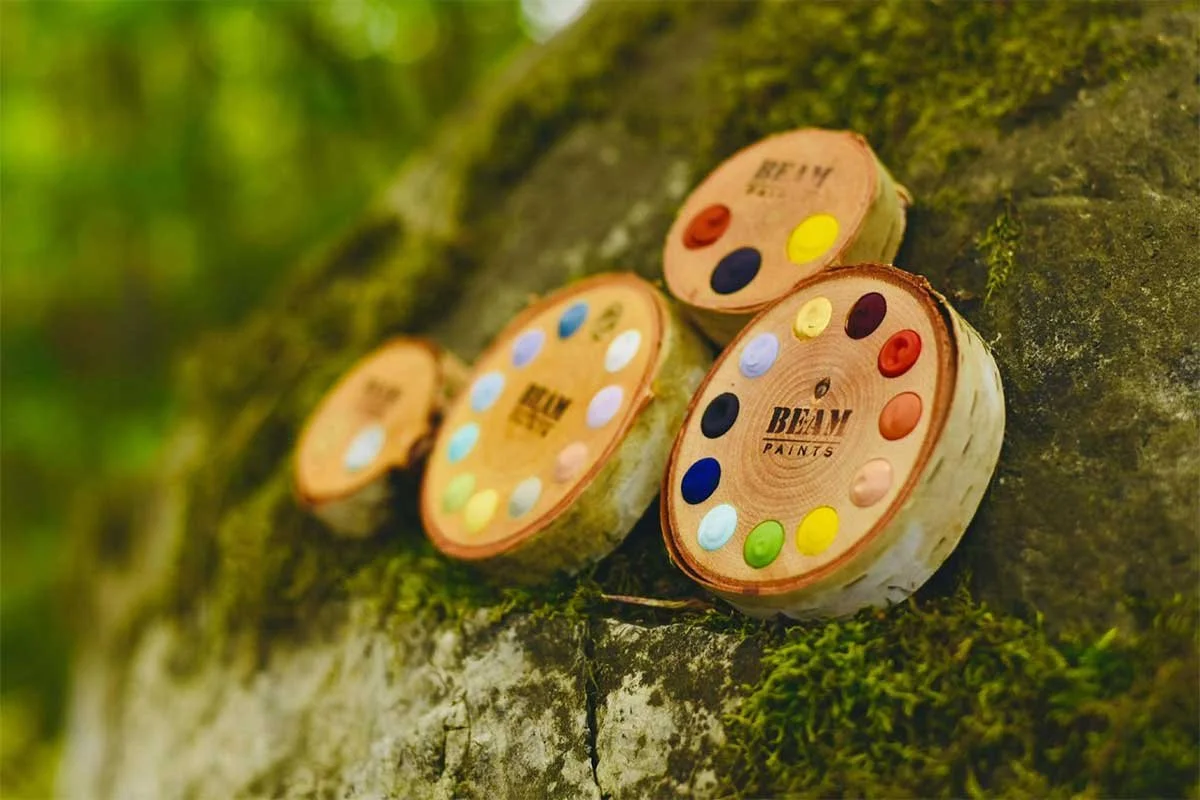
Beam Paints offers artists a wide variety of colour palettes in sizes large and small.
Asked about the idea of producing house paints, Ms. Beam says, “Yes, we have the recipe for that, we also have a recipe for textile ink, but our plans to do that shifted because we’re trying to keep up with this part that we’re doing. We’re working on a couple of other projects, different things, but people will just have to wait and see what comes next,” she says. Though hesitant to talk about those other projects in the works, Ms. Beam assures us we’ll be invited back when she’s got them up and running.
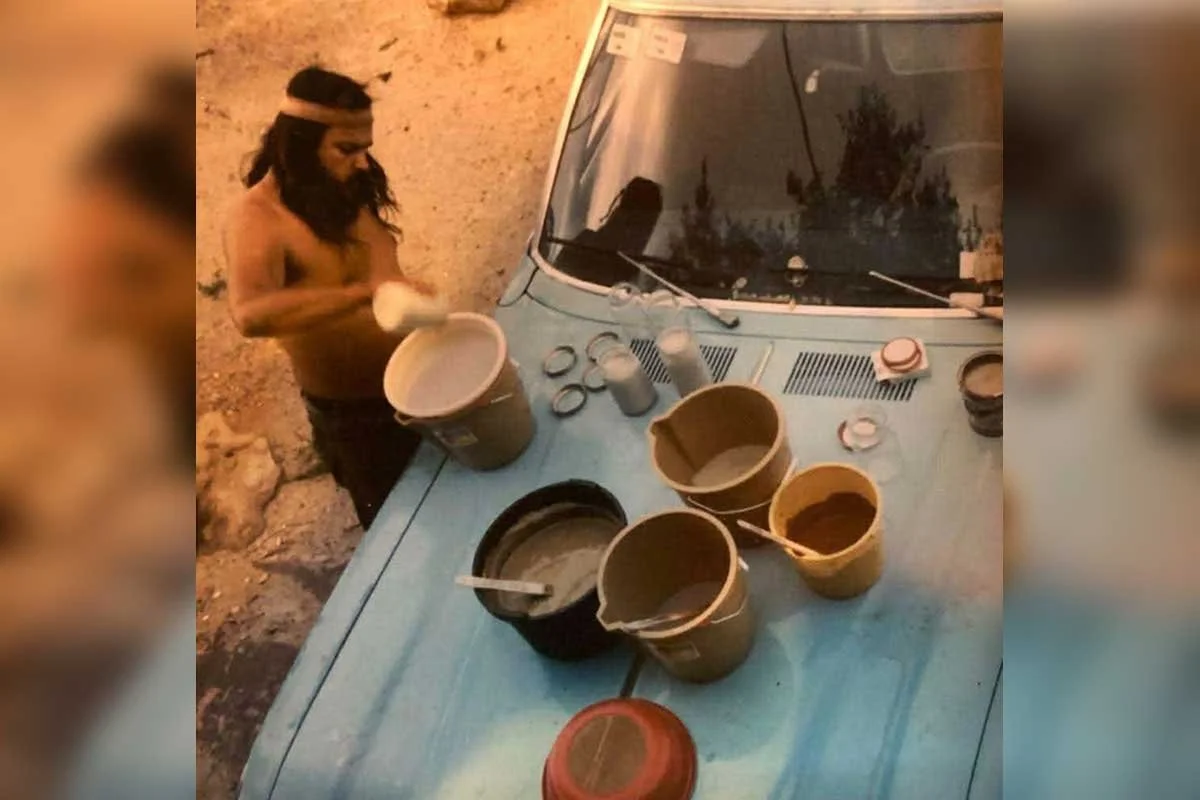
Where it all began. Carl Beam mixing his paints, a talent he passed on to his daughter Anong.
The Island Jar was the first store on the Island to sell Beam paints, “But we were in business maybe about four years by that point.” Ms. Beam says and though the Island Jar no longer exists, Beam products are now found in many stores on Manitoulin Island and countless stores and galleries all over Canada and beyond. You can find a complete list on their website. You can also find the full array of their products on their website and you can come into their store in M’Chigeeng to see all these products in person.
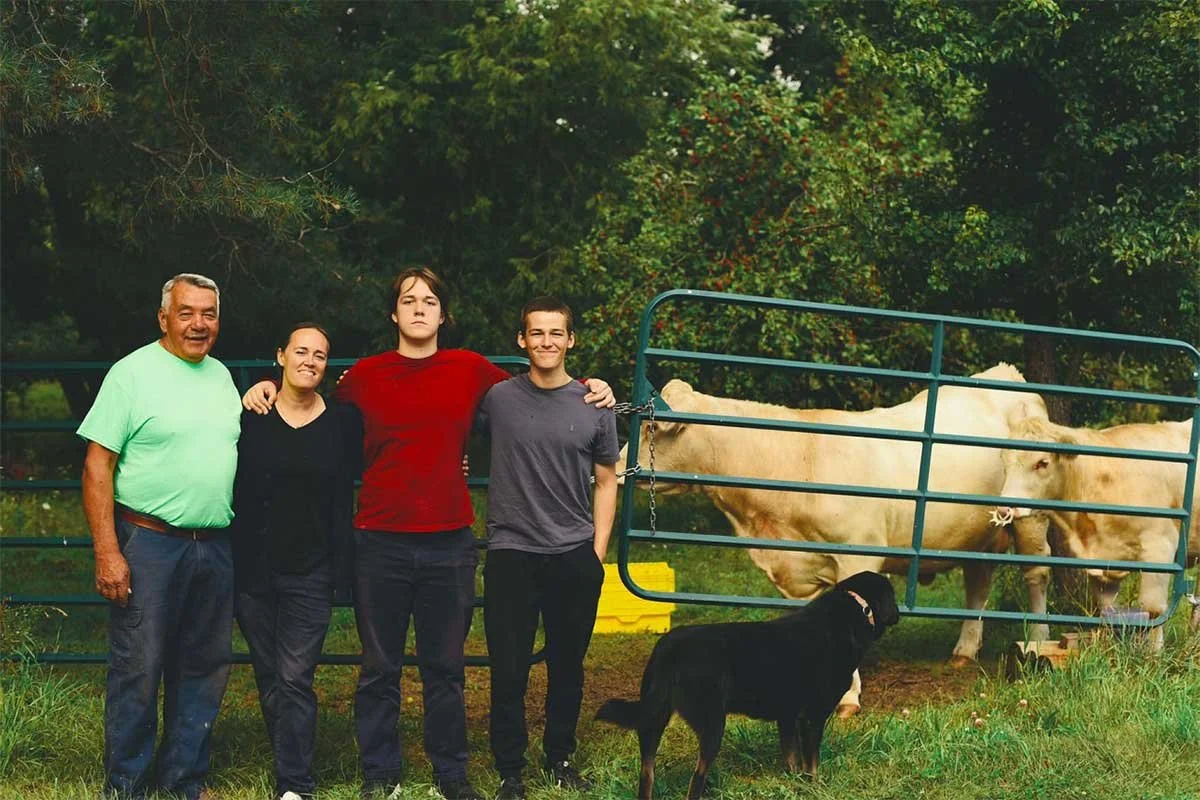
Dennis Corbiere, Anong Beam and her sons Lux and Riel.
Beam Paints is on Facebook and Instagram, with quick little painting video clips. “That’s me painting in the videos, I do all the painting videos for the shop, I really love helping people who think that painting is too hard, or who always wanted to start but didn’t know where to begin,” Ms. Beam says. With their printer, they have also developed cards Ms. Beam calls “paintables,” 5”x3.5” notecards featuring the wildflowers, birds and butterflies of Manitoulin Island “They’re like paint by numbers without numbers,” she explains with a smile.
The remarkable growth of Beam Paints is clearly a combination of the quality, the beauty and the safety of the products and the dedication of Anong Beam, striving to perfect her paints while preserving the environment. Beam Paints is 100% Anishnaabe-kwe owned, operating in M’Chigeeng First Nation, employing paint makers and woodworkers, men and women from the communities of M’Chigeeng, Sagamok and Wikwemikong. It’s well worth the drive to M’Chigeeng to find them or look for them online: www.beampaints.com. You’ll be glad you did.
Beam Paints, 37 Corbiere Road, M’Chigeeng.